About the species
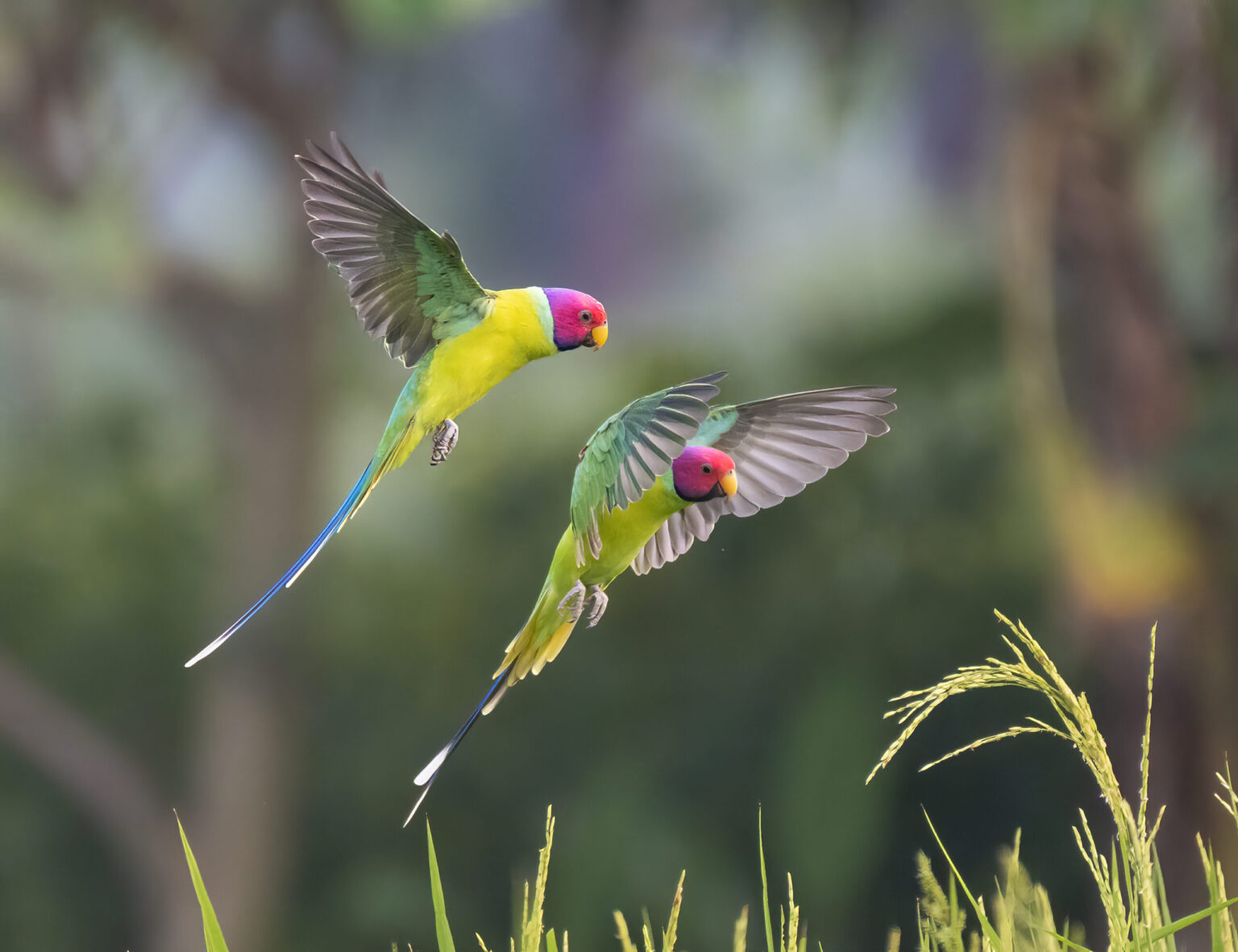
The plum-headed parakeet (Psittacula cyanocephala) is a slender, elegant parakeet from South Asia. It occurs naturally across the Indian subcontinent — from India, Nepal and Pakistan to Sri Lanka and Bangladesh — where it lives in open deciduous forest, woodland edges, parkland and farmland.
Including its tail, the bird measures about 33 cm. Its plumage is mainly green, with a long, pointed, blue-tipped tail. Most striking is the difference between male and female (sexual dimorphism):
- Male: a plum-red to purple-blue head with a narrow black neck-ring and a conspicuous maroon shoulder patch.
- Female: a bluish-grey head, a faint yellowish collar and no maroon shoulder patch.
- Juveniles: a greenish to grey head; the adult head pattern only appears after the first moult.
It is a quiet, sociable bird with a soft, pleasant voice — far less harsh than that of the related rose-ringed parakeet. In the wild it often lives in small flocks and is a fast, agile flier. Its diet consists of seeds, fruit, berries, buds and blossom; it sometimes forages in farmland.
Plum-headed parakeets nest in tree cavities and usually lay 4 to 6 eggs. With its calm temperament and beautiful colours, it is a popular aviary bird.